How it works, in detail
What happens to a recording
- Record at the chair. Phone or desktop. The dentist pins the main language (EN / 中文 / BM); the recording can still switch mid-sentence.
- Transcribe. Speech-to-text with the pinned language. Segments that are silence or noise are dropped rather than guessed at, and a handful of known mis-hearings of dental terms are corrected only where the context is unambiguous.
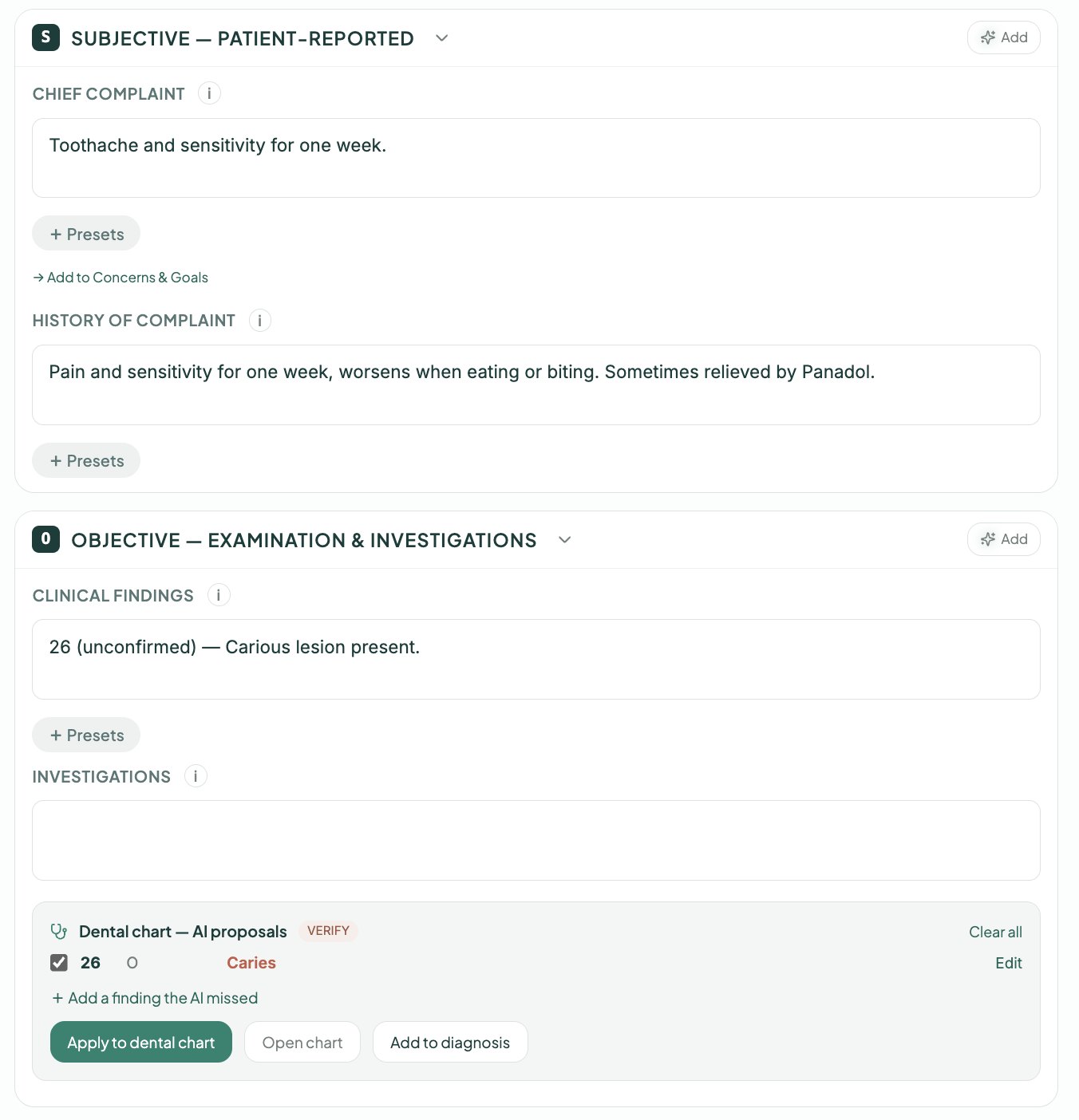
- Structure. A language model drafts the SOAP note, the findings per tooth, the procedures done or planned, local anaesthetic and prescriptions, and proposals for the odontogram and perio chart.
- Audit the draft against the transcript. This step is code, not a prompt (below). It removes or labels anything the model added that was not said.
- Dentist reviews and signs. Warnings sit on the note until a person resolves them. Only a signed note is part of the record. The transcript stays attached, so every line can be traced back.
The guardrails — why a prompt is not enough
Early on, the model was asked, in capitals, not to default to a particular anaesthetic. On a recording of a five-year-old where the dentist only said "a little bit of numbing", it still wrote a full adult agent, strength and vasoconstrictor into the draft. A prompt is a request; a model can decline it. So the checks that matter run as code that cannot:
Drug names and strengths
Every agent, concentration and prescription in the draft is matched literally against the transcript. A drug the dentist did not name is not written as a fact — it is kept as a labelled suggestion the dentist must confirm or delete. The note carries a "do not sign" warning until that is done.
Tooth numbers and tooth states
A finding on tooth 36 must have tooth 36 in the words around it. Whole-tooth states — crown, bridge, implant, root canal, missing — are only charted when the recording names them for that tooth; a material word mis-heard as a restoration type is dropped and named in the audit, not silently charted.
Measurements
A probing depth or any "N mm" in a finding must appear in that tooth's part of the transcript. "26 PD 5 mm" cannot become "4 mm" in the note; a changed value is labelled unconfirmed.
Language mismatch
If the pinned language and the script of the transcript disagree (Mandarin pinned, Latin text out), the note shows it and offers a re-transcription in the right language — this is the usual cause of garbled terms.
Whole-arch work
The scribe only ever produces a suggestion for a treatment plan. Tapping it opens the plan builder with the teeth pre-selected as toggles; nothing is quoted, planned or billed until the dentist has deselected what is wrong.
Every one of these checks exists because a real recording got it wrong first. They are tests in the codebase, not promises in a prompt.
Typed notes, same checks
Not every room is quiet. Type or paste the consultation and it goes through the same structuring and the same audit, skipping only the audio step. The Core plan includes typed notes; Pro adds the voice allowance. See the allowances →
Traceability and privacy
- Each signed note keeps its transcript, the language it was transcribed in, and a provenance report of what the audit removed or flagged.
- Audio and text are sent for transcription and structuring with model training disabled.
- Every AI touchpoint in the system is listed in an in-app AI register the clinic can hand to an auditor.